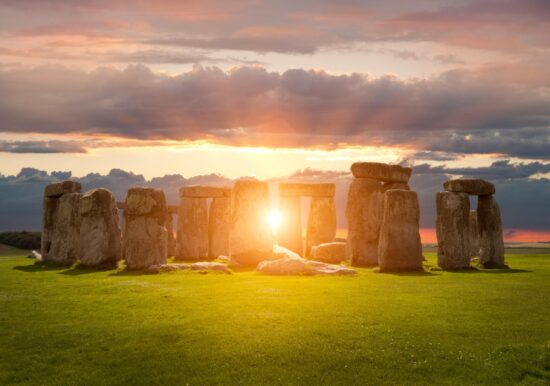
 Standing sentinel on Salisbury Plain for over 4,500 years, Stonehenge remains one of the world's greatest prehistoric mysteries. This iconic stone circle draws visitors from across the globe, all seeking to understand the purpose and meaning behind these towering sarsen stones that have captivated imaginations for millennia.
A Monument Built Across Generations
Stonehenge wasn't constructed in a single burst of activity but evolved over approximately 1,500 years. The site began around 3000 BCE as a simple earthwork enclosure, but the iconic stone circle we recognize today was erected around 2500 BCE during the late Neolithic period.
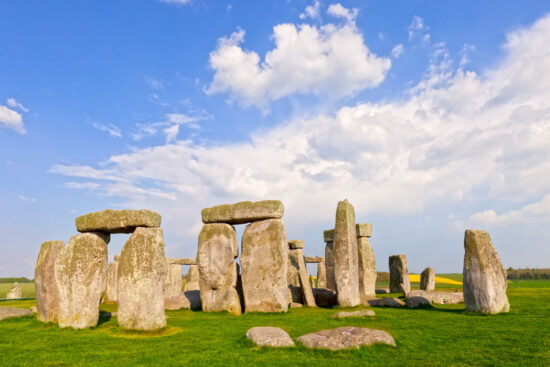
The monument consists of an outer ring of standing stones, each around 13 feet high and weighing approximately 25 tons. These massive sarsen stones were brought from Marlborough Downs, roughly 20 miles away. Inside this outer circle stand smaller bluestones, which remarkably originated from the Preseli Hills in Wales, over 150 miles distant. How Neolithic people transported these four-ton stones such distances without wheels or draft animals remains one of archaeology's great puzzles.
Theories and Mysteries
The purpose of Stonehenge has inspired countless theories. Was it an astronomical observatory? A healing temple? A burial ground for elite families? Recent archaeological evidence suggests it served multiple purposes over its long history.
The stones align with the solstices, suggesting astronomical significance. During the summer solstice, the sun rises directly over the Heel Stone, casting its first rays into the heart of the monument. Similarly, the winter solstice sunset aligns with the stones in the opposite direction. These alignments indicate that the builders possessed sophisticated understanding of celestial movements.
Archaeological excavations have uncovered cremated remains of approximately 150 individuals, suggesting Stonehenge also functioned as a cemetery for high-status individuals over several centuries. Additionally, evidence of feasting and gatherings points to its role as a ceremonial center where communities came together for important rituals.
 Visiting Stonehenge Today
Stonehenge is located near Amesbury in Wiltshire, easily accessible from London (about 90 miles) or Bath (40 miles). The site is managed by English Heritage, with a state-of-the-art visitor center opened in 2013 that provides excellent context before you approach the stones.
Best Times to Visit:
- Early morning or late afternoon for the best light and fewer crowds
- Winter months offer a more atmospheric, mystical experience
- Special access tours at dawn or dusk (must be booked well in advance)
- Summer and winter solstice celebrations draw thousands, creating a unique communal experience
The visitor center features fascinating Neolithic house reconstructions, showing how the builders might have lived, and displays of artifacts discovered during excavations. A shuttle bus transports visitors to the stone circle itself, though you can also walk the mile and a half across the landscape.
Photography Tips
While you cannot walk among the stones during regular visiting hours (they're roped off to protect them), you can photograph from all angles around the perimeter:
- Bring a zoom lens to capture detail on the stones
- Wide-angle lenses work beautifully for dramatic sky compositions
- The site looks spectacular under moody, cloudy skies—don't let "bad" weather deter you
- Late afternoon offers warm, golden light
- Special access tours (separate ticket required) allow you to walk among the stones for unforgettable photos
Fascinating Facts
- Some stones weigh as much as 50 tons
- The lintels (horizontal stones) were shaped using primitive tools and connected with mortise and tenon joints—advanced carpentry techniques rendered in stone
- Over 150 cremation burials were discovered at the site
- The bluestones were arranged and rearranged multiple times over centuries
- Stonehenge is part of a wider landscape of Neolithic monuments, including nearby Durrington Walls and the Avenue
Practical Information
- Pre-booking tickets is essential, especially during peak season
- Allow 2-3 hours for your visit including the visitor center
- Wear comfortable walking shoes
- The site is exposed with little shade—prepare for weather conditions
- Audio guides are included with admission
- Combine with visits to nearby Salisbury Cathedral or the ancient hill fort of Old Sarum
Whether you're drawn by its mystery, its astronomical alignments, or simply the raw power of standing before stones raised by our distant ancestors, Stonehenge offers an unforgettable experience that connects us to Britain's prehistoric past.