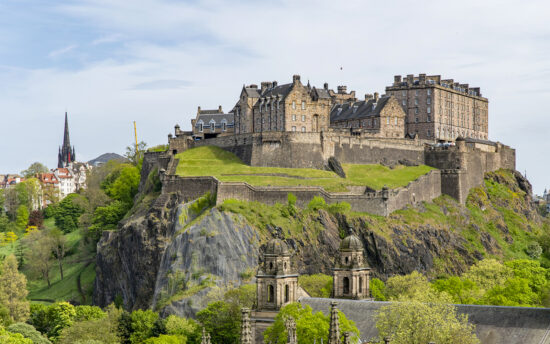
 Perched dramatically atop Castle Rock, an ancient volcanic outcrop that towers over Scotland's capital, Edinburgh Castle stands as one of the most iconic fortifications in the world. For over a thousand years, this imposing stronghold has witnessed sieges, royal ceremonies, political intrigue, and some of the most pivotal moments in Scottish history.
The strategic importance of Castle Rock was recognized long before the castle we see today took shape. Archaeological evidence suggests human occupation dating back to the Iron Age, around the 2nd century AD. The naturally defensible position, with sheer cliffs on three sides and commanding views across the surrounding landscape, made it an ideal location for early fortifications.
The earliest historical references to a royal castle on the rock appear in the 12th century. During the reign of David I in the 1100s, the castle began to take form as a royal residence and military stronghold. David established a chapel dedicated to his mother, Saint Margaret, which still stands today as the oldest surviving building in Edinburgh and one of the oldest structures in Scotland.
Throughout the medieval period, Edinburgh Castle served as both a royal palace and a crucial military fortress. It became a favored residence of Scottish monarchs and housed the Honours of Scotland—the crown jewels that symbolized Scottish sovereignty. The castle witnessed the births of kings, including James I in 1394.
The Wars of Scottish Independence in the late 13th and early 14th centuries transformed the castle into a fiercely contested prize. Control of Edinburgh Castle meant control of Scotland's heartland, and it changed hands multiple times between Scottish and English forces. In 1314, following Robert the Bruce's victory at Bannockburn, the castle was recaptured by the Scots in a daring night raid. Bruce subsequently ordered much of it destroyed to prevent it from falling into English hands again.
One of the most dramatic episodes occurred during the Lang Siege of 1571-1573, when supporters of the imprisoned Mary, Queen of Scots held the castle against forces loyal to her infant son, James VI. The siege lasted nearly two years and ended only when English artillery reduced much of the medieval castle to rubble.
 After the Lang Siege, the castle was extensively rebuilt. The Royal Palace served as lodgings for monarchs and their courts, and Mary, Queen of Scots gave birth to James VI there in 1566—an event of enormous historical significance as James would eventually unite the crowns of Scotland and England.
As Scotland's political center shifted following the Union of the Crowns in 1603, and especially after the Acts of Union in 1707, Edinburgh Castle's role as a royal residence diminished. Instead, it increasingly functioned as a military garrison and prison, housing prisoners of war during various conflicts, including Jacobite supporters, American privateers, and French prisoners during the Napoleonic Wars.
The 19th century brought renewed appreciation for the castle's historical significance. In 1818, the Honours of Scotland were rediscovered in a locked chest within the castle, having been hidden away after the Acts of Union. This find helped cement the castle's status as a repository of Scottish identity.
Today, Edinburgh Castle stands as Scotland's most visited paid attraction, welcoming over two million visitors annually. It houses important national treasures, including the Honours of Scotland, the Stone of Destiny, and the National War Museum of Scotland.
The castle remains an active military site, serving as the headquarters of the Royal Regiment of Scotland. Most famously, the One O'Clock Gun has been fired from the castle ramparts every day (except Sundays, Good Friday, and Christmas Day) since 1861. Each August, the castle forms the dramatic backdrop for the Royal Edinburgh Military Tattoo, a spectacular display that has become one of Scotland's most celebrated annual events.
Edinburgh Castle's endurance across more than a millennium speaks to both its strategic importance and its symbolic power. From ancient hillfort to medieval stronghold, from royal palace to military garrison, and now as a world-renowned heritage site, the castle has continuously evolved while remaining a constant presence in Scotland's story—a living symbol of Scottish heritage where history is preserved, celebrated, and continually reinterpreted for new generations.